cocktaildna

United States

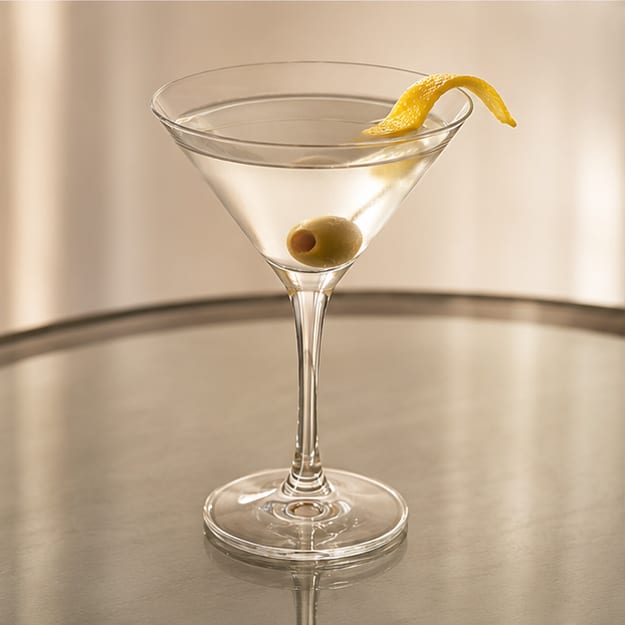
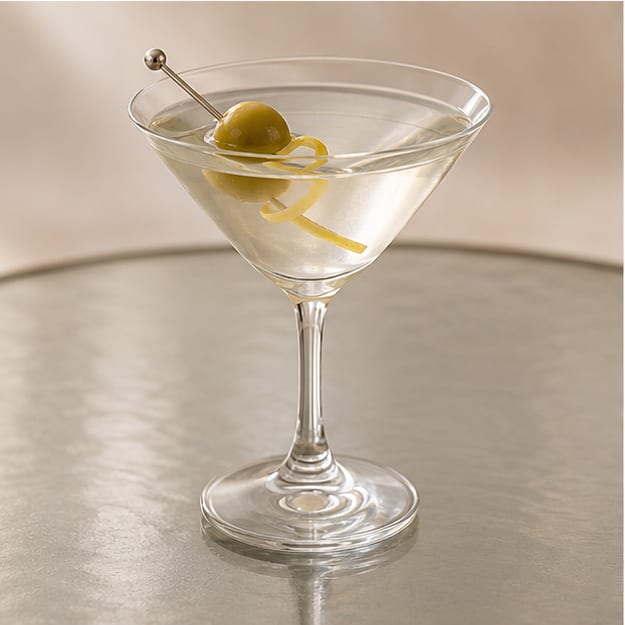
Dry Martini

Also known as Martini, Gin Martini

A cold, spirit-forward drink that's mostly gin with just a whisper of dry vermouth.

herbaldryspirit-forwardjunipercrispbotanicalstrongaperitif

%

ABV

Difficulty

Dry Martini

Overview

What this drink is like

The first sip hits you with the botanical punch of gin, backed by a crisp, dry chill. The middle is smooth and slightly herbal, while the finish is clean and warming with a lingering dryness.

Who will like it

For people who like strong, spirit-forward drinks with herbal notes and no sweetness.

When to drink

Drink this before dinner to wake up your palate, or late at night when you want something strong and slow.

Ordering tip

Specify your gin, how dry you want it, and whether you want an olive or a twist.

Ice: NoneTemp: ColdCost: $2–$5Glass: MartiniBatch-friendlyMake aheadHome bar friendly

Flavor

Taste profile

A Dry Martini hits you first with the sharp, cold bite of gin and the smell of juniper and citrus. Underneath that, the dry vermouth adds a subtle, herbal softness that keeps the alcohol from being completely overwhelming. It is a strong, sharp drink with no sweetness to hide behind, finishing clean and dry.

Finish: The finish runs long and warming, with lingering juniper and a dry, slightly bitter bite.

Primary tastes

herbalbitter

Secondary

floralearthy

Aroma

junipercitrusbotanical
  • Bitternessmoderately bitter

    The gin's botanicals and the dry vermouth bring a firm, drying bitterness without being harsh.

  • Strengthvery spirit-forward

    This is almost entirely gin, making it one of the strongest classic cocktails you can order.

  • Refreshingmoderately refreshing

    Served ice cold, it has a crisp, bracing quality that wakes up the palate.

  • Complexitylayered

    The interplay between the gin's botanicals, the vermouth's herbs, and the citrus oils gives it quiet depth.

Recipe

Make it at home

Stirred · Martini · equal parts on Gin. London Dry recommended for a classic crisp profile

Before you start

Put your Martini glass in the freezer for at least 10 minutes before making the drink. Make sure your vermouth is fresh and kept in the fridge, because old vermouth will ruin the taste.

Ingredients

  • GinBase SpiritLondon Dry recommended for a classic crisp profile60ml
  • Dry VermouthVermouthKeep it refrigerated after opening10ml
  • Orange BittersoptionalBittersAdds a subtle aromatic lift2 dashes
  • Lemon TwistGarnishExpress oils over the drink1 twist
  • Green OliveoptionalGarnishBriny alternative to the twist1 green olive

Garnish: Lemon Twist, Green Olive

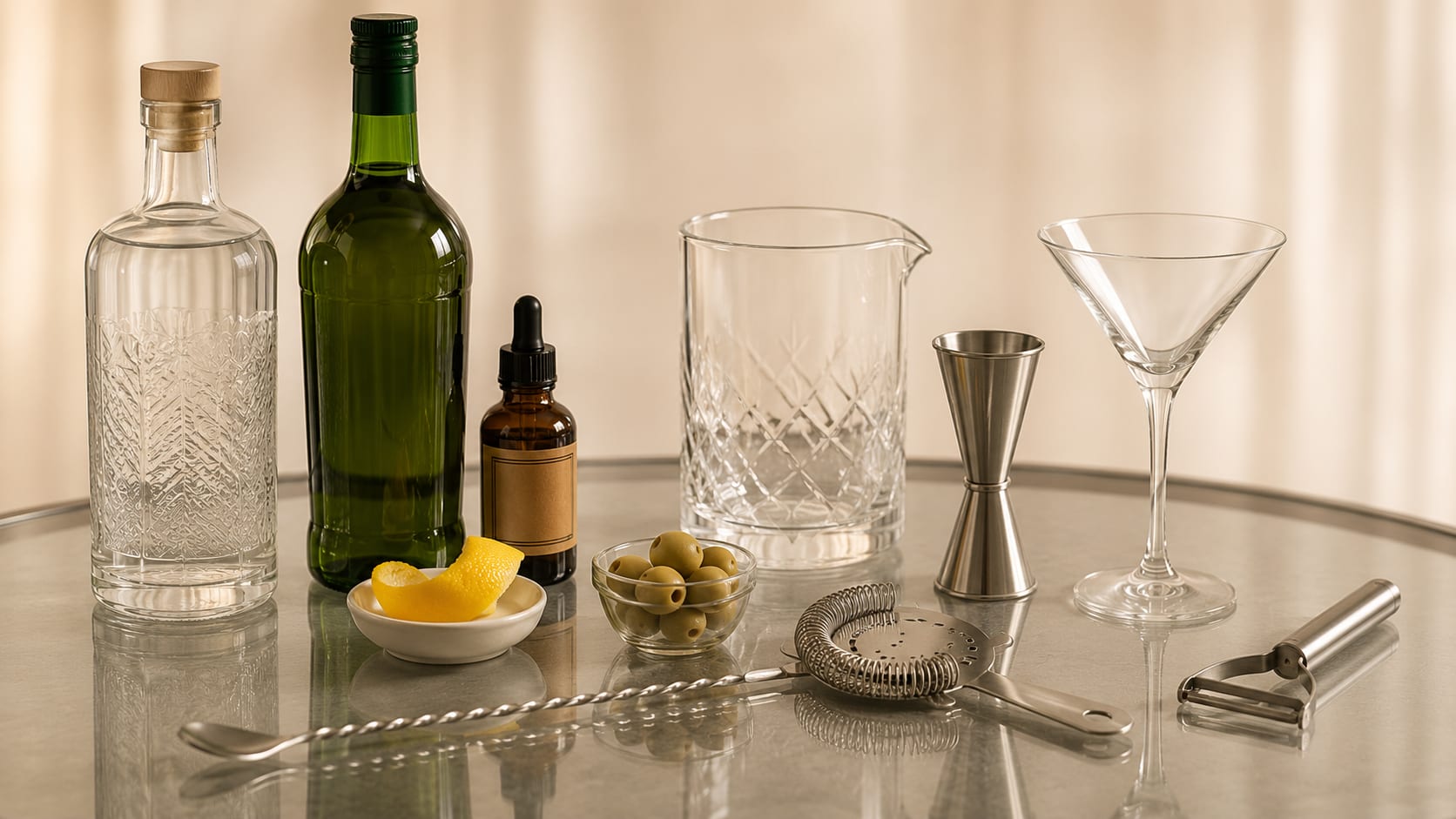
Tools

  • Mixing glass · Mixing

    To stir and chill the ingredients without clouding them

    At home: A large pint glass

  • Bar spoon · Mixing

    To stir the drink smoothly and evenly

    At home: A long spoon or chopstick

  • Jigger · Measuring

    To measure the gin and vermouth accurately

    At home: A shot glass or measuring spoon

  • Hawthorne strainer · Straining

    To keep the ice out of the serving glass

    At home: A slotted spoon or fine mesh strainer

  • Martini glass · Serving

    The classic serving vessel that keeps the drink cold

    At home: Any stemmed glass

  • Vegetable peeler · Garnish

    To cut a clean swath of lemon peel for the twist

    At home: A small sharp knife

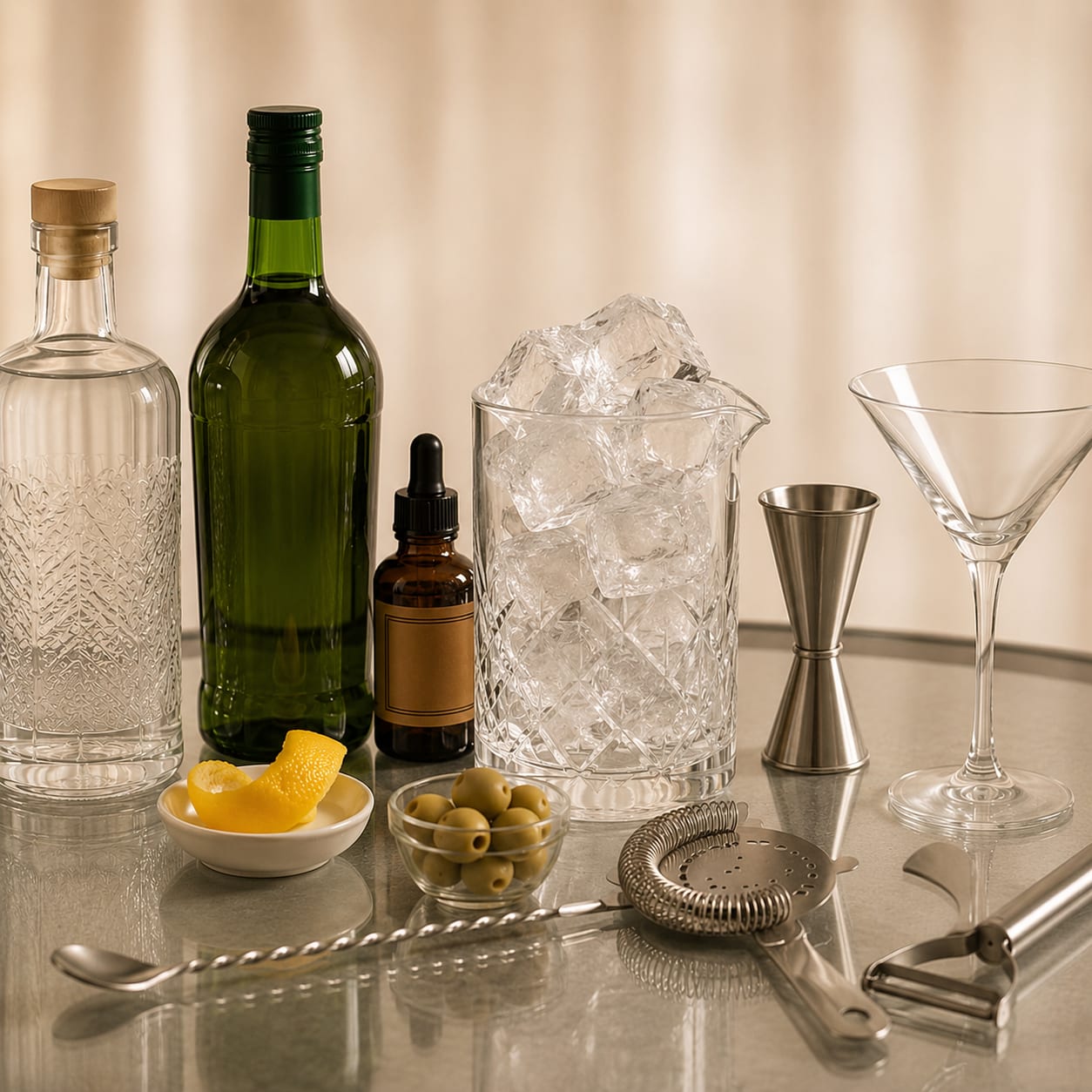
Ingredients and tools to make Dry Martini
Ingredients and tools

Steps

  1. 1

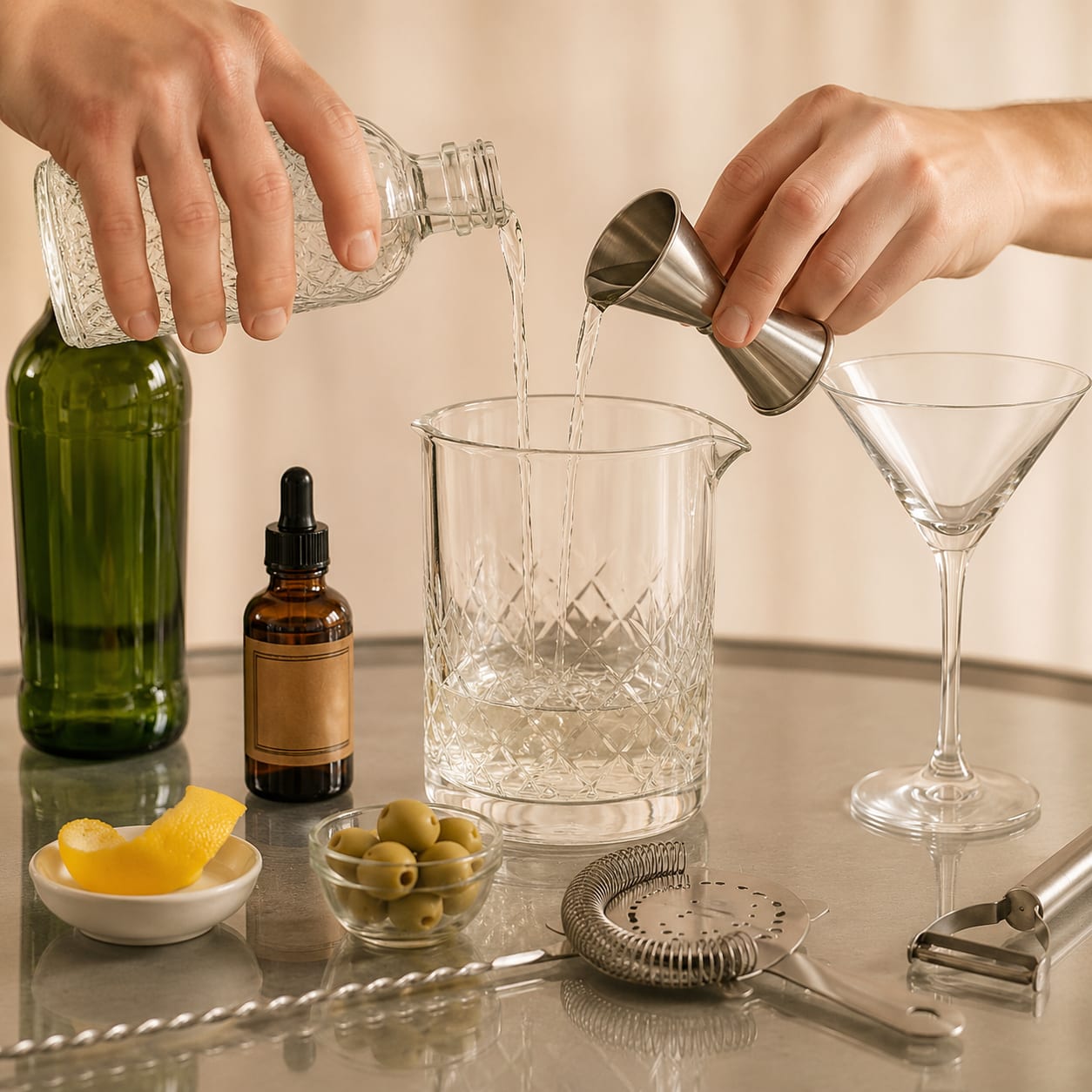
    Measure 60ml of gin and 10ml of dry vermouth into the mixing glass. Add 2 dashes of orange bitters if you are using them. The vermouth ratio is up to your taste, but start here for a classic dry balance.

    Step 1 — how to make Dry Martini

    !Using too much vermouth makes the drink taste watery and flat instead of crisp.

  2. 2

    Fill the mixing glass to the top with large, solid ice cubes. The more ice you use, the less it melts and waters down your drink while you stir. The ice should sit well above the liquid line.

    Step 2 — how to make Dry Martini

    !Using small, cracked ice will melt too fast and over-dilute the drink before it gets cold.

  3. 3

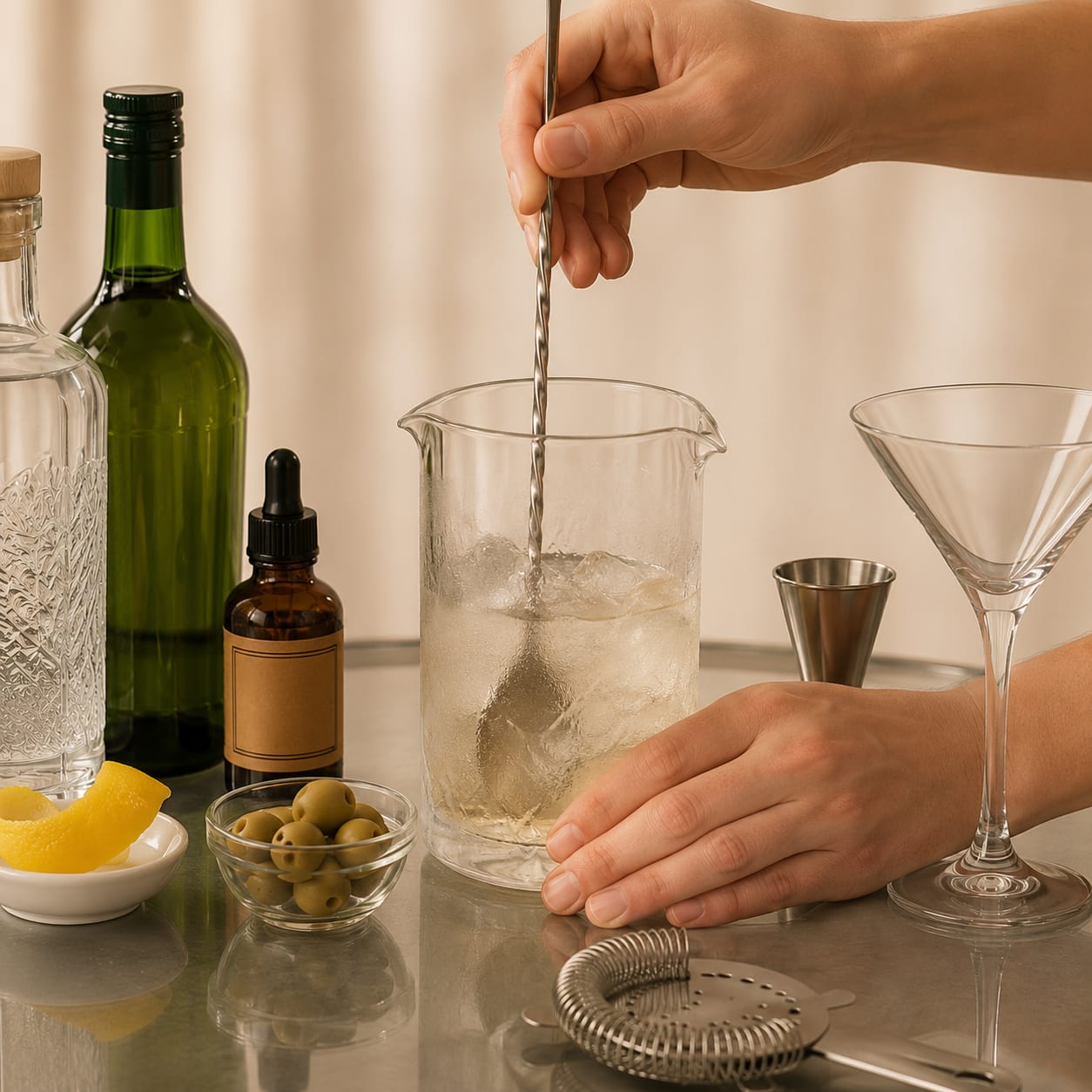
    Grab your bar spoon and stir steadily for about 30 seconds. You will know you are done when the outside of the mixing glass feels very cold to the touch and frost starts to form on the outside.

    ~30s

    Step 3 — how to make Dry Martini

    !Stirring too fast or aggressively chips the ice and makes the drink cloudy.

  4. 4

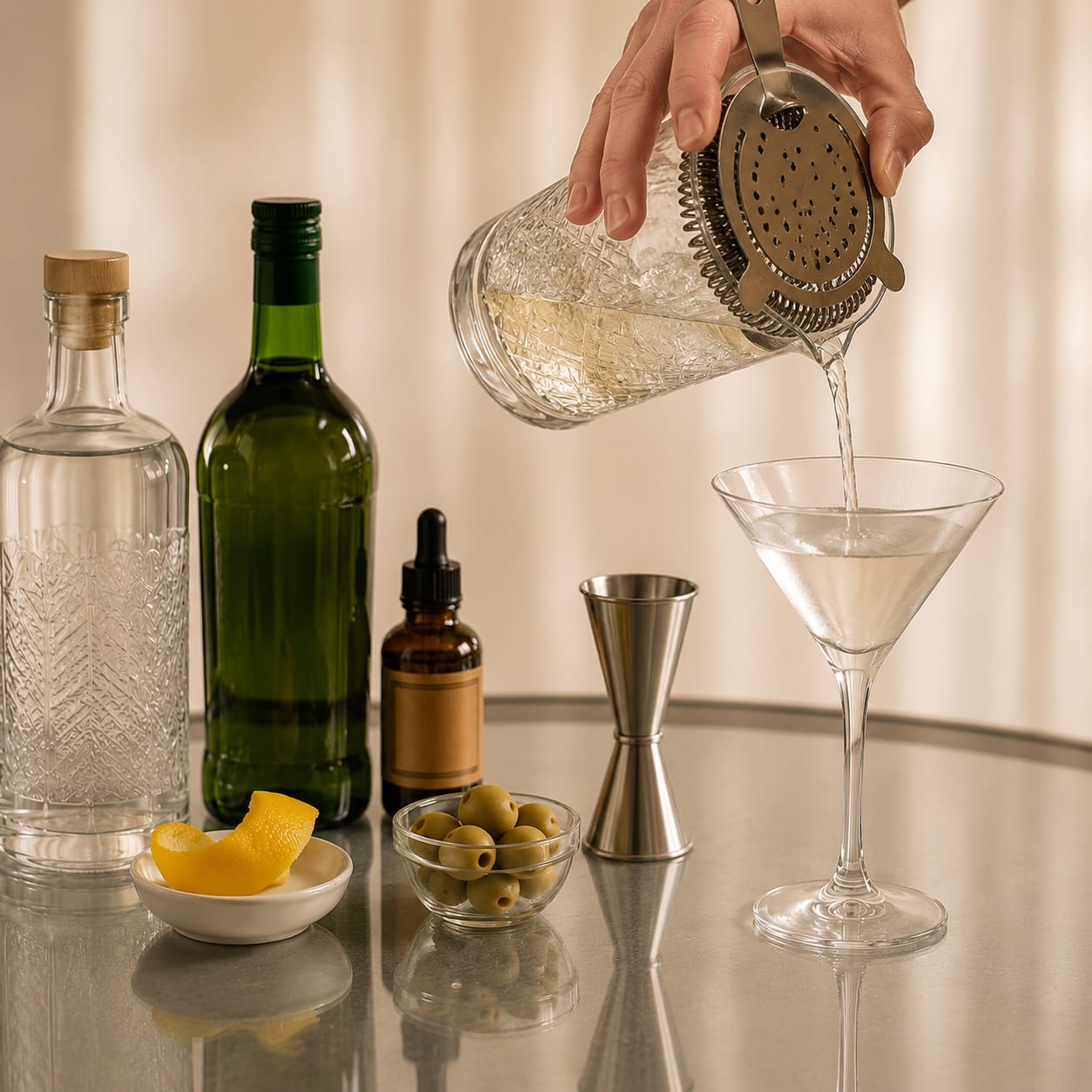
    Take your chilled Martini glass and place the Hawthorne strainer over the top of the mixing glass. Pour the drink through the strainer into the glass, leaving all the ice behind in the mixing glass.

    Step 4 — how to make Dry Martini

    !Letting ice slip into the serving glass waters it down quickly.

  5. 5

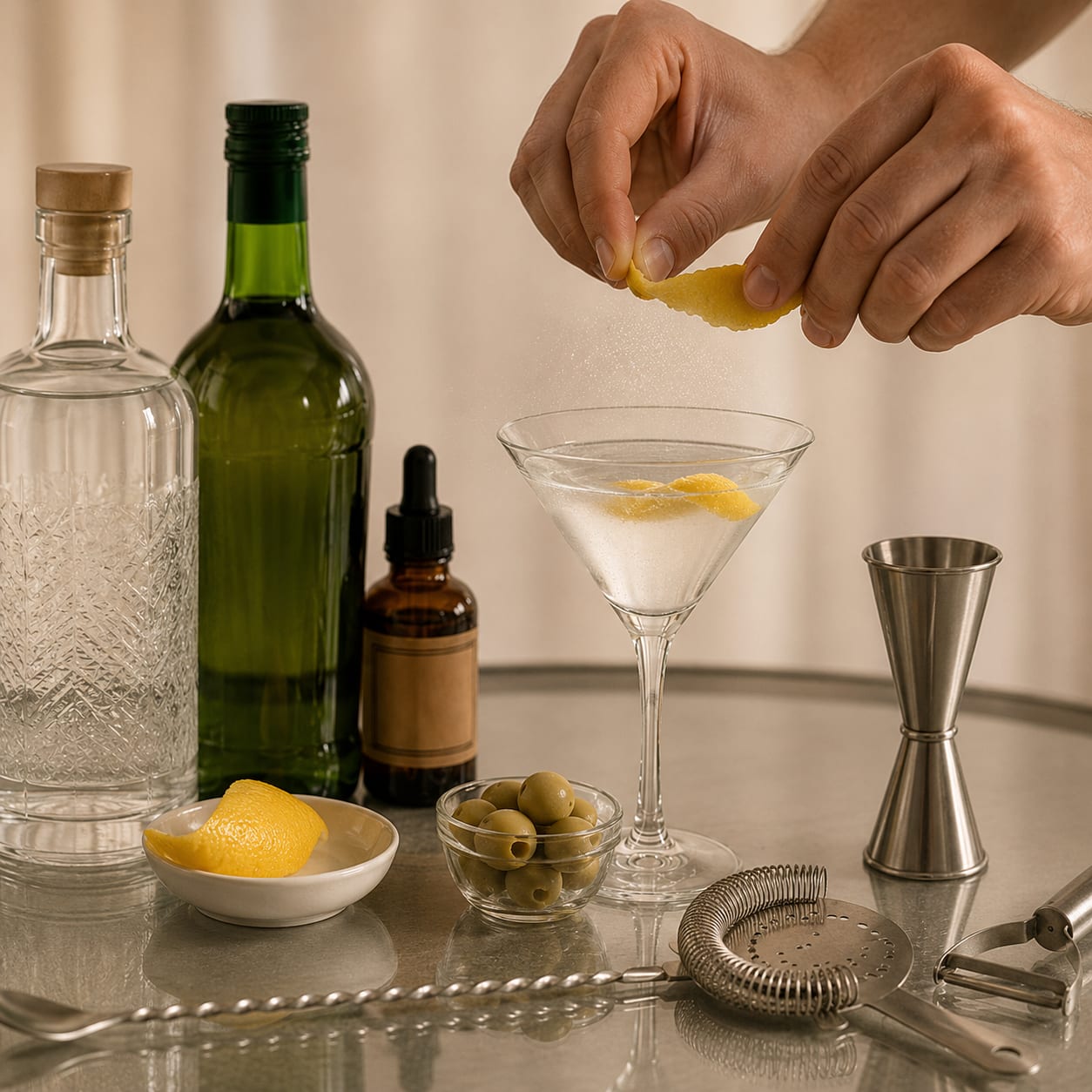
    Hold a lemon peel over the drink, colored side facing down, and give it a good twist so the oils spray over the surface. Drop the peel into the glass, or swap it for a green olive if you prefer a salty kick.

    Step 5 — how to make Dry Martini

    !Twisting the peel colored side up sprays the citrus oils away from the drink.

Serve

Serve it straight up in the chilled Martini glass right after straining. It should be ice cold with no ice in the glass, so drink it before it warms up.

Variations

Ingredient substitutions

Each row shows what you can swap in place of an original ingredient, and how the drink changes.

Swap options for Gin

  • GinVodka
    Match
    Common availability

    GinVodka: Swaps the herbal botanicals for a clean, neutral bite.

Swap options for Dry Vermouth

  • Dry VermouthLillet Blanc
    Match
    Specialty availability

    Dry VermouthLillet Blanc: Adds a slightly sweeter, more floral and citrusy profile.

Swap options for Lemon Twist

  • Lemon TwistGreen Olive
    Match
    Common availability

    Lemon TwistGreen Olive: Adds a savory, briny, and salty element instead of bright citrus.

Related

Similar cocktails

Cousin drinks that share DNA with this one — each profile stands on its own.

Vodka Martini

Similar cocktail

Vodka Martini

Uses vodka instead of gin for a neutral base.

Match

The Vodka Martini is cleaner and sharper, while the Gin Martini has a botanical, herbal depth.

In common: spirit-forward, stirred, served up

Ingredients

Both share

Dry Vermouth, Orange Bitters

Only in Dry Martini

Gin, Lemon Twist

Only in Vodka Martini

Vodka, Green Olive

Swapping gin for vodka removes the botanical backbone, making the drink rely entirely on the vermouth for flavor.

Flavor

Shared flavors

crisp, cold, and strong, dry profile

How Vodka Martini differs

cleaner and neutral, lacks herbal bite

View recipe & details →
Gibson

Similar cocktail

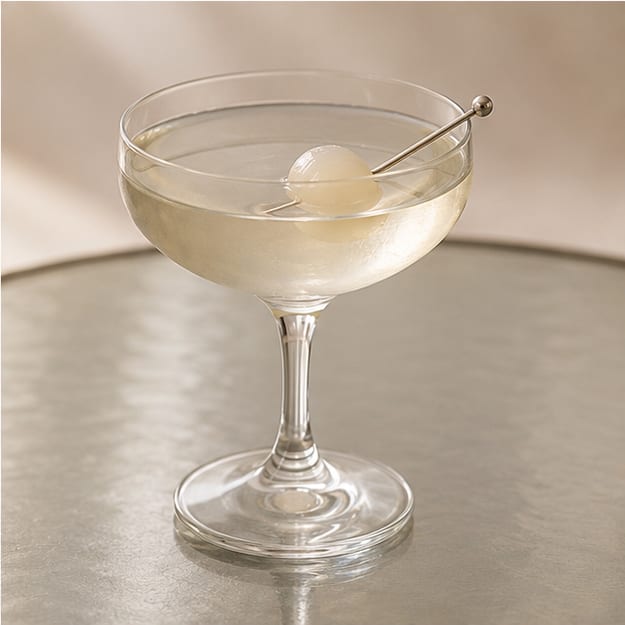
Gibson

Uses a pickled cocktail onion instead of an olive or twist.

Match

The Gibson drinks very similarly but the pickled onion gives it a distinct, savory tang on the finish.

In common: stirred, gin and vermouth base, served up

Ingredients

Both share

Gin, Dry Vermouth

Only in Dry Martini

Orange Bitters, Lemon Twist

Only in Gibson

Pickled Cocktail Onion

The onion garnish introduces a savory, vinegary note that changes the entire aroma.

Flavor

Shared flavors

dry, gin-forward profile, crisp and strong

How Gibson differs

savory and slightly tangy, no citrus oils

View recipe & details →

Martinez

Similar cocktail

Martinez

Uses sweet vermouth and maraschino liqueur, making it much sweeter and richer.

Match

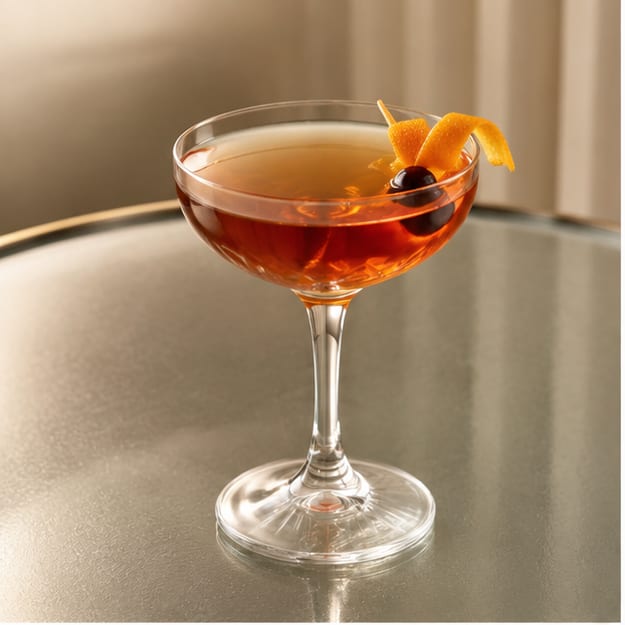
The Martinez is sweeter and heavier, tasting more like a gin Manhattan than a crisp Dry Martini.

In common: gin base, stirred, historical classic

Ingredients

Both share

Gin, Orange Bitters

Only in Dry Martini

Dry Vermouth, Lemon Twist

Only in Martinez

Sweet Vermouth, Maraschino Liqueur

Sweet vermouth and maraschino liqueur replace the dry vermouth, adding sugar and stone fruit notes.

Flavor

Shared flavors

botanical gin backbone, orange bitters accent

How Martinez differs

sweeter, richer mouthfeel, fruitier finish

View recipe & details →

History

Origin

The exact origin is heavily disputed, with some claiming it evolved from the Martinez in California and others tracing it to a bartender at the Knickerbocker Hotel in New York. What is certain is it appeared in bartending guides in the late 1880s and originally used sweet vermouth before shifting to dry.

Era
1880s
IBA
The Unforgettables
Data version
IBA 2020 spec
Confidence

The ratio of gin to vermouth varies widely by preference, from 2:1 to practically none; 6:1 is used here as a modern standard.

Practical

Tips & pitfalls

What works at home and what to skip when making this drink.

Tips

Worth knowing before you pour

  • Keep your vermouth in the fridge once opened, it goes bad fast.
  • Stirring is non-negotiable; shaking waters it down and makes it cloudy.
  • Freeze your glass beforehand for the best frosty experience.

Avoid

Common mistakes

  • Don't use old vermouth that's been sitting in the cupboard for months.
  • Don't shake it unless you want a bruised, cloudy drink.