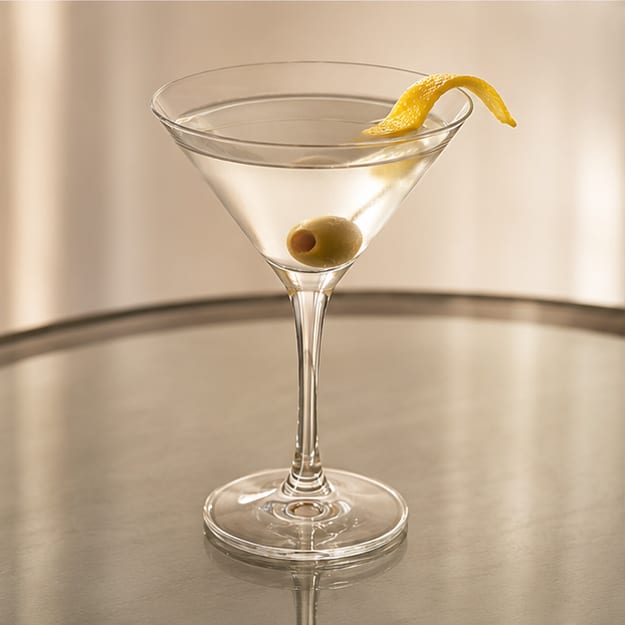
cocktaildna

United States

Gibson

Also known as Gibson Martini, Gibson Cocktail

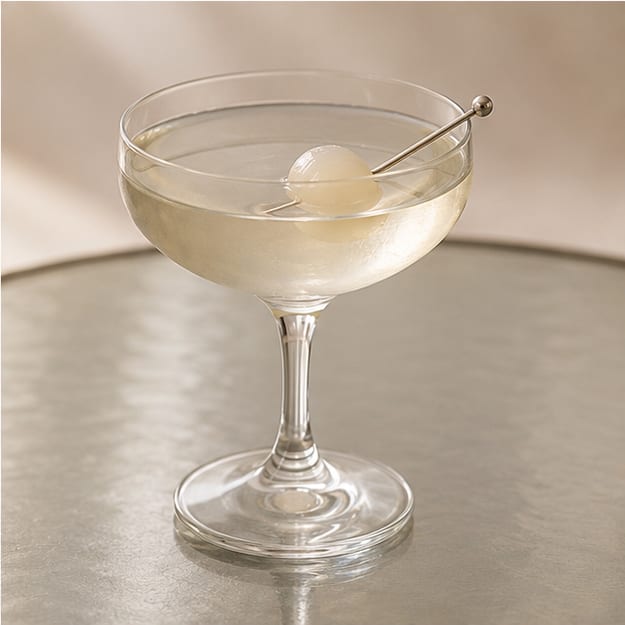
A Gibson is a dry, spirit-forward gin cocktail that's essentially a Martini with a cocktail onion instead of an olive or citrus twist.

dryginsavorybrinyspirit-forwardbotanicalonionaperitifcoldsharp

%

ABV

Difficulty

Gibson

Overview

What this drink is like

The first sip is cold and sharp, all gin and dry vermouth with a clean bite. The middle opens up the vermouth's subtle herbal notes while the gin's botanicals spread across your tongue. The finish is dry and savory, with a faint onion tang that lingers after the last drop.

Who will like it

This is for people who like bone-dry, spirit-forward drinks and want something savory rather than bright or citrusy.

When to drink

Drink this before dinner — it's a classic aperitif that wakes up your palate without filling you up.

Ordering tip

Ask for your onion preference (one small vs. several pearl onions) and specify your vermouth ratio if you don't want it bone-dry.

Ice: NoneTemp: ColdCost: $2–$4Glass: CoupeBatch-friendlyMake aheadHome bar friendly

Flavor

Taste profile

A Gibson is a cold, strong, no-nonsense drink that hits you with gin botanicals first and leaves you with a dry, savory finish. There's almost no sweetness or acidity to soften it — just clean spirit and a whisper of vermouth. The cocktail onion is the wildcard, adding a briny, slightly earthy note that sets it apart from a standard Martini. It's not a complicated drink, but it's not trying to be — it's sharp, direct, and unapologetically dry.

Finish: The finish runs long and dry, with gin warmth and a faint onion-brine savoriness hanging on after the sip.

Primary tastes

herbalearthy

Secondary

saltybitter

Aroma

juniperbrinedry botanicals
  • Bitternessmildly bitter

    A faint bitterness from the vermouth and gin botanicals sits in the background but never takes over.

  • Strengthvery spirit-forward

    This is mostly gin with barely any mixer, so the alcohol hits you right away.

  • Refreshingmoderately refreshing

    The cold temperature and clean finish give some refreshment, but the high ABV and lack of acidity keep it from feeling light.

  • Complexitymodestly complex

    Two ingredients plus a garnish keep it simple, but the interplay between gin botanicals and onion brine adds a small twist.

Recipe

Make it at home

Stirred · Coupe · equal parts on Gin. London Dry recommended for the classic bracing style

Before you start

Stick your serving glass in the freezer for at least 10 minutes before you start. Make sure your vermouth is fresh — if it's been open in the fridge for more than a month, it'll taste flat.

Ingredients

  • GinBase SpiritLondon Dry recommended for the classic bracing style60ml
  • Dry VermouthVermouthKeep refrigerated after opening; fresh vermouth matters here10ml
  • Cocktail OnionGarnishPearl onion pickled in brine; the defining garnish1-2 pieces

Garnish: Cocktail onion

Tools

  • Mixing glass · Mixing

    Combine and stir the gin and vermouth with ice to chill and dilute without clouding

    At home: Large pint glass or wide-mouth mason jar

  • Bar spoon · Mixing

    Stir the drink smoothly and evenly without splashing

    At home: Long-handled teaspoon or chopstick

  • Jigger · Measuring

    Measure the gin and vermouth accurately so the balance stays tight

    At home: Tablespoon — 1 tbsp ≈ 15ml

  • Hawthorne strainer · Straining

    Hold back the ice when pouring the drink into the glass

    At home: Slotted spoon or small fine-mesh sieve

  • Coupe or Martini glass · Serving

    Serve the drink chilled and stem-held so your hand doesn't warm it

    At home: Any small stemmed wine glass

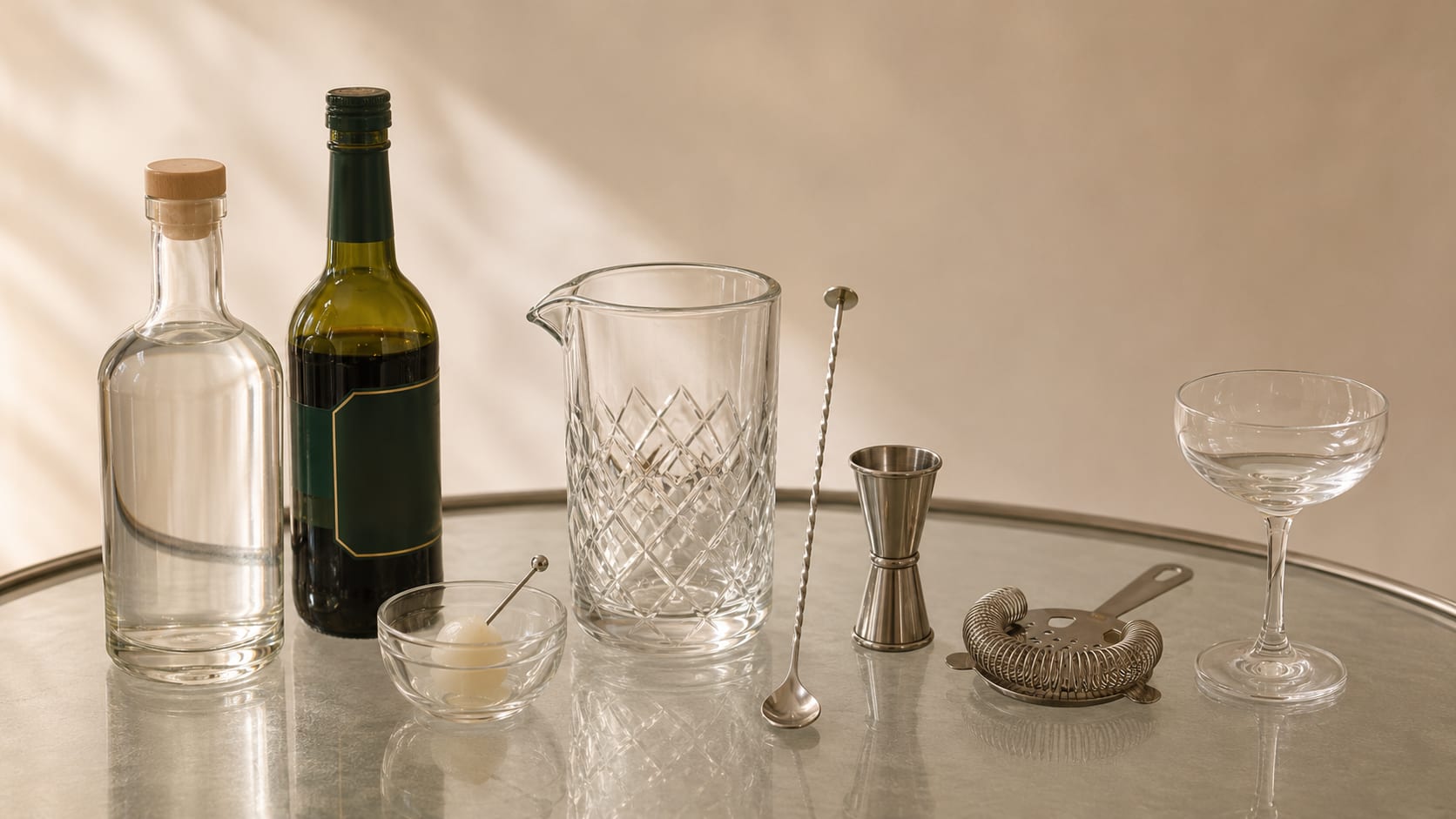
Ingredients and tools to make Gibson
Ingredients and tools

Steps

  1. 1

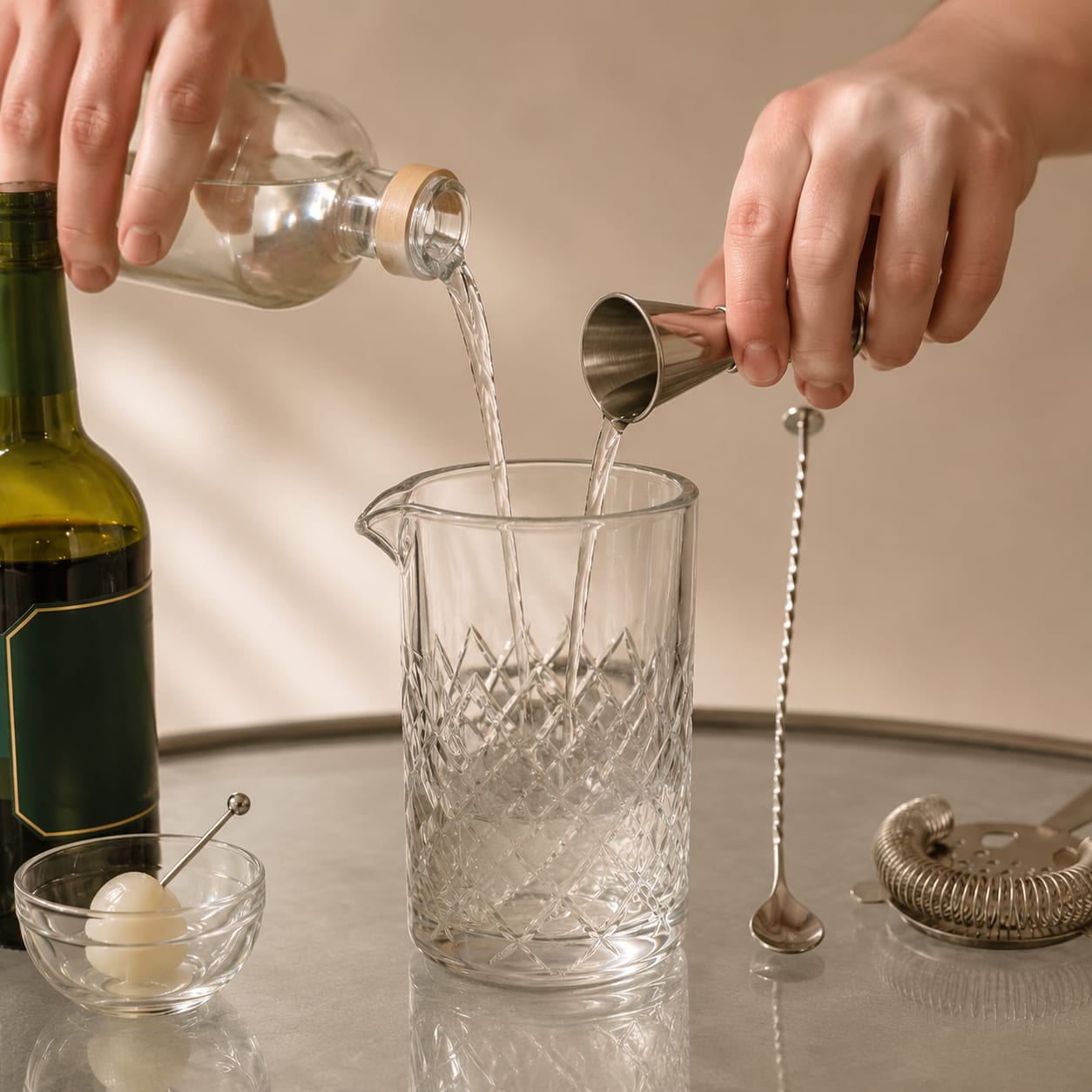
    Take your mixing glass and pour in 60ml gin and 10ml dry vermouth using your jigger. The vermouth ratio is low here, so measure it — free-pouring will throw off the balance.

    Step 1 — how to make Gibson

    !Over-pouring the vermouth makes the drink taste flabby and loses the sharp dry character.

  2. 2

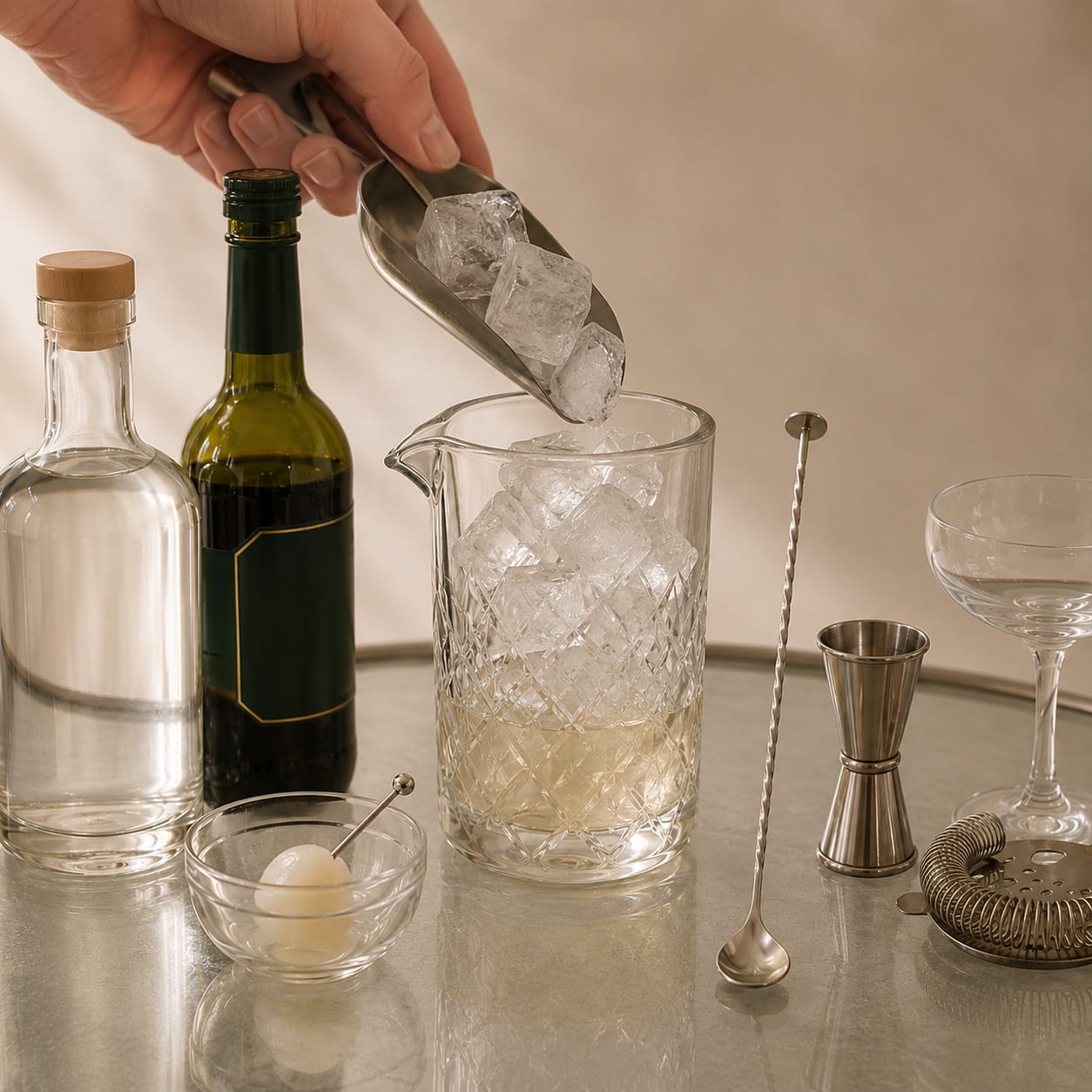
    Fill the mixing glass about three-quarters full with ice — big cubes if you have them, since they melt slower and give you more control. The ice should sit above the liquid line so everything chills evenly.

    Step 2 — how to make Gibson

    !Using too little ice means the drink takes longer to chill and picks up extra water.

  3. 3

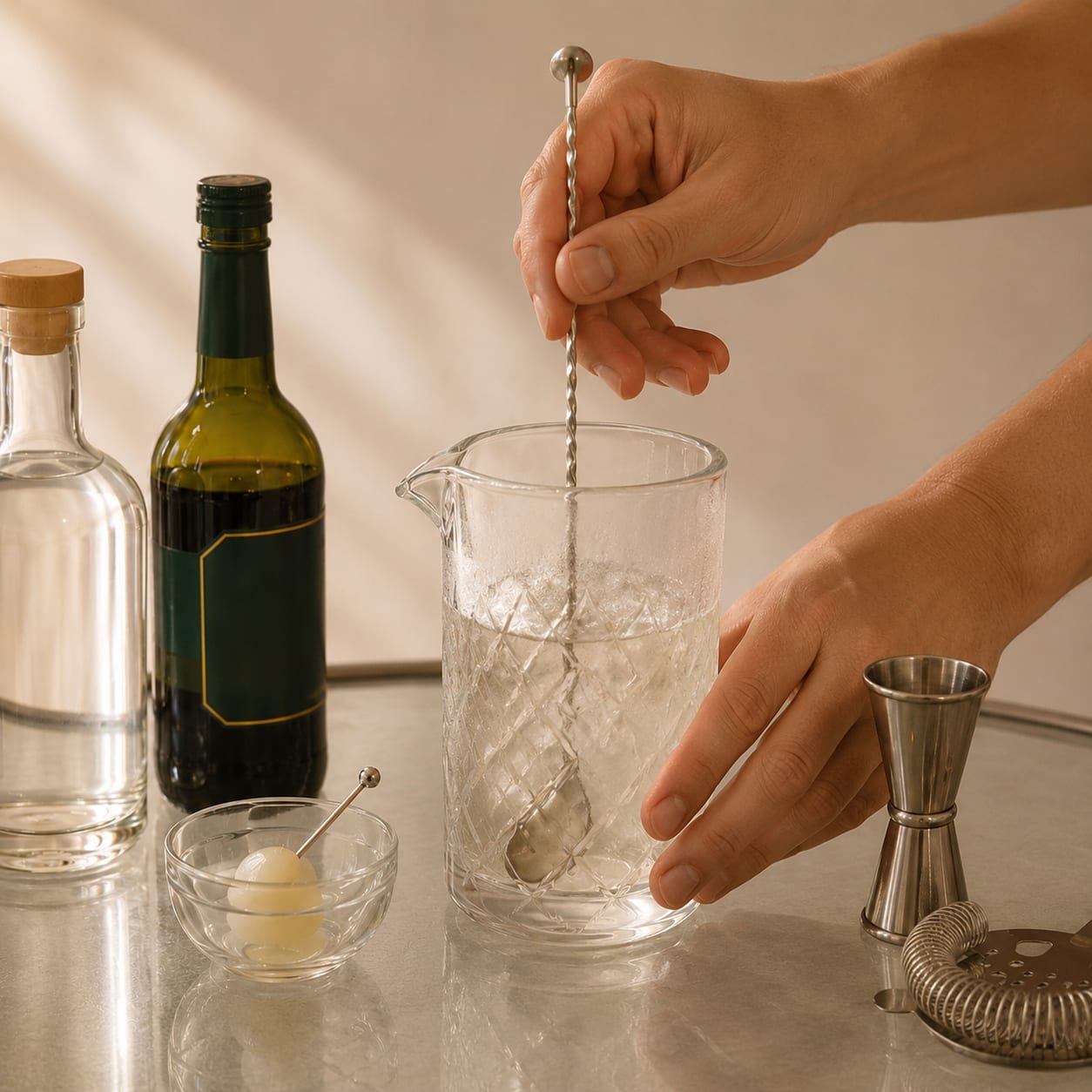
    Stir steadily with your bar spoon for about 20 to 30 seconds, moving the spoon smoothly around the inside edge of the glass. You'll know you're done when the outside of the mixing glass feels cold and frosty to the touch.

    ~25s

    Step 3 — how to make Gibson

    !Stirring too fast or aggressively chips the ice and clouds the drink.

  4. 4

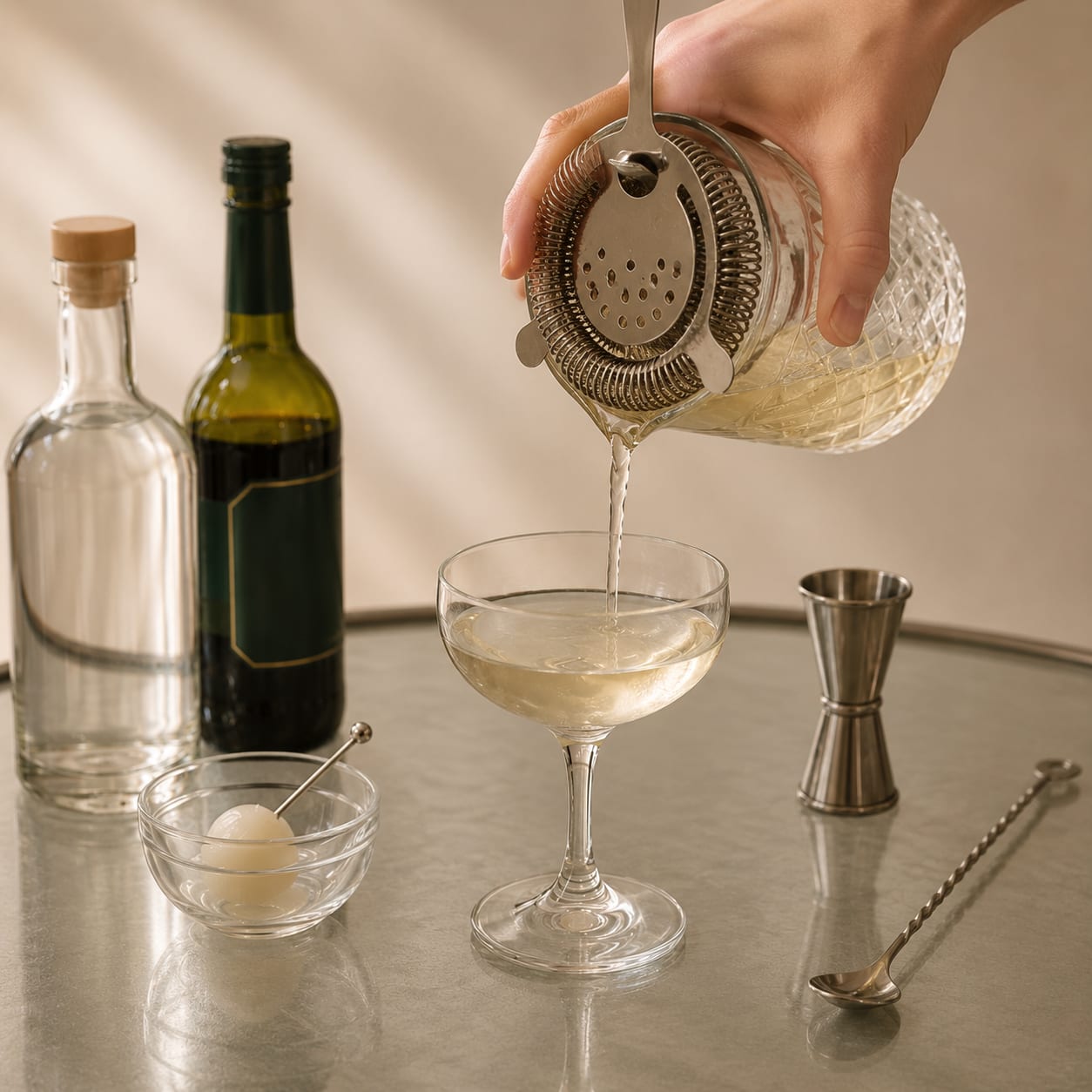
    Place your Hawthorne strainer over the top of the mixing glass and pour the drink into your chilled coupe or Martini glass. Pour slowly so you don't splash, and stop before any ice slips through.

    Step 4 — how to make Gibson

    !Pouring too fast can let small ice shards slip past the strainer.

  5. 5

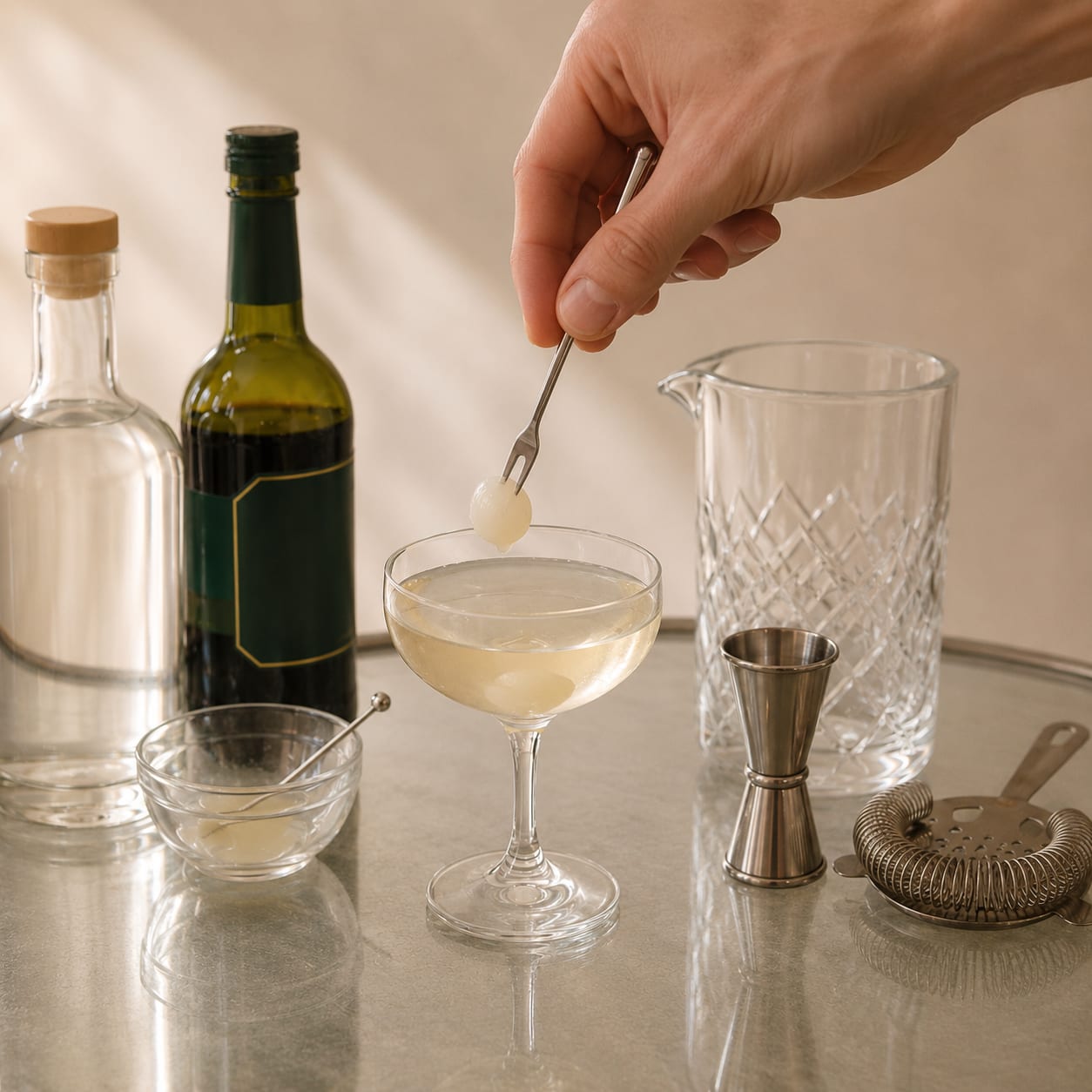
    Drop one or two cocktail onions into the glass — use a small fork or your fingers. Let them sink to the bottom; they'll slowly release a savory brine into the last sips.

    Step 5 — how to make Gibson

    !Using too many onions overpowers the drink with brine and makes the last sip taste like pickle juice.

Serve

Serve it right away in the chilled stem glass — this drink doesn't wait well. The onion goes in last, and the drink should be drunk before it warms up.

Variations

Ingredient substitutions

Each row shows what you can swap in place of an original ingredient, and how the drink changes.

Swap options for Gin

  • GinVodka
    Match
    Common availability

    GinVodka: Removes the botanical character and makes the drink cleaner but blander.

Swap options for Dry Vermouth

  • Dry VermouthBlanc Vermouth
    Match
    Specialty availability

    Dry VermouthBlanc Vermouth: Adds a touch more sweetness and floral notes, softening the drink's dry edge.

Swap options for Cocktail Onion

  • Cocktail OnionOlive
    Match
    Common availability

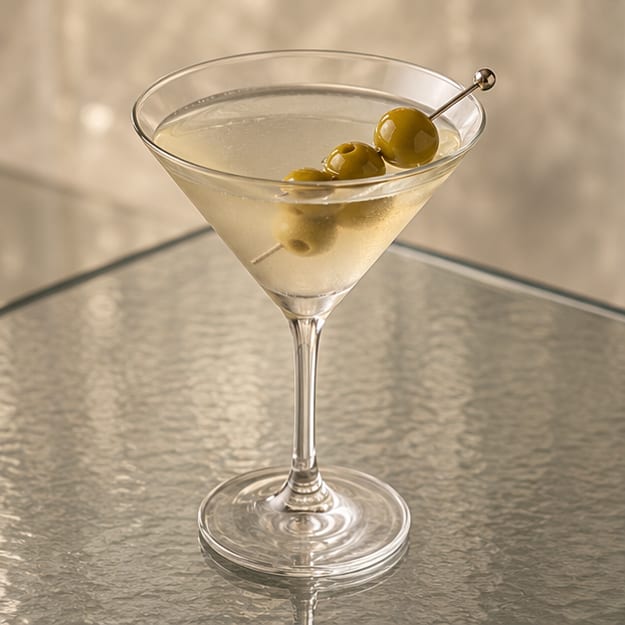
    Cocktail OnionOlive: Turns the drink into a standard Martini — you lose the onion's earthy brine for a saltier, oilier note.

Related

Similar cocktails

Cousin drinks that share DNA with this one — each profile stands on its own.

Dry Martini

Similar cocktail

Dry Martini

The Martini uses an olive or citrus twist instead of a cocktail onion, giving it a different savory note.

Match

They drink almost identically until the finish, where the Gibson's onion adds an earthy, slightly pungent brine while the Martini's olive leaves a richer, oilier saltiness.

In common: spirit-forward, stirred, served up, bone dry, aperitif

Ingredients

Both share

Gin, Dry Vermouth

Only in Gibson

Cocktail Onion

Only in Dry Martini

Olive

The only ingredient difference is the garnish — onion versus olive — but that swap changes the savory character from earthy-briny to salty-oily.

Flavor

Shared flavors

strong gin backbone, dry vermouth herbal whisper, cold and spirit-forward

How Dry Martini differs

onion brine vs. olive oil, earthier finish vs. saltier finish

View recipe & details →
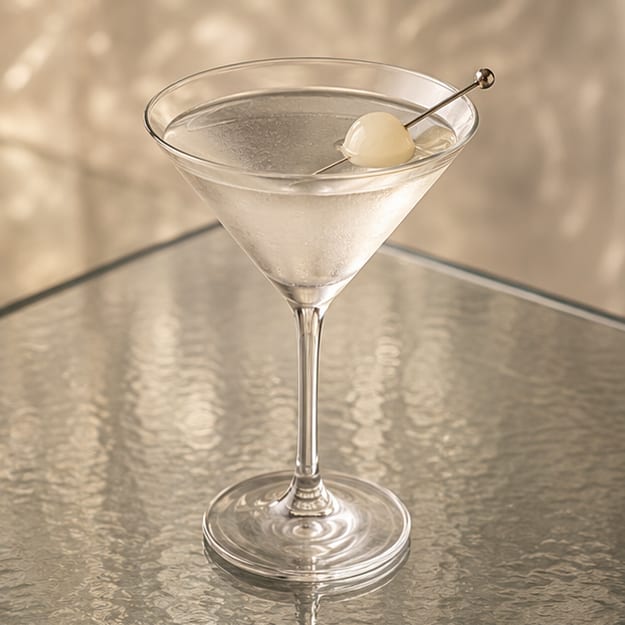
Vodka Gibson

Similar cocktail

Vodka Gibson

Vodka replaces gin, stripping away the botanical backbone.

Match

The Vodka Gibson is flatter and more austere — without gin's botanicals, the drink relies entirely on the vermouth and onion for character.

In common: stirred, served up, onion garnish, dry

Ingredients

Both share

Dry Vermouth, Cocktail Onion

Only in Gibson

Gin

Only in Vodka Gibson

Vodka

Swapping gin for vodka removes the juniper and botanical notes, leaving a cleaner, more neutral spirit that lets the vermouth and onion stand out more.

Flavor

Shared flavors

onion brine finish, dry vermouth herbal hint, cold and strong

How Vodka Gibson differs

no juniper or botanicals, thinner mouthfeel, sharper alcohol edge

View recipe & details →

Dirty Martini

Similar cocktail

Dirty Martini

The Dirty Martini adds olive brine directly to the drink, making it wetter and saltier.

Match

The Dirty Martini is bolder and saltier from the first sip because the brine is mixed in, while the Gibson stays cleaner with the onion's influence building slowly toward the end.

In common: spirit-forward, stirred, served up, briny garnish

Ingredients

Both share

Gin, Dry Vermouth

Only in Gibson

Cocktail Onion

Only in Dirty Martini

Olive, Olive Brine

The Dirty Martini adds olive brine as a liquid ingredient, making the drink itself salty and cloudy, while the Gibson's onion is just a garnish that slowly flavors the last sips.

Flavor

Shared flavors

gin-forward, dry vermouth backbone, savory briny notes

How Dirty Martini differs

saltier and wetter, cloudier appearance, more pronounced brine throughout

View recipe & details →

History

Origin

The Gibson's origin is disputed. One common account credits Charles Dana Gibson, the illustrator, who supposedly asked a bartender at the Players Club in New York to serve him a Martini garnished with a pearl onion to distinguish it from others at lunch. Another account names San Francisco businessman Walter D.K. Gibson as the creator. Neither story is firmly documented, and the drink's true origin remains uncertain.

Era
1900s
IBA
The Unforgettables
Data version
IBA current spec
Confidence

The Gibson is an IBA Unforgettables cocktail with a well-established spec; the origin story is disputed with no definitive documentation.

Practical

Tips & pitfalls

What works at home and what to skip when making this drink.

Tips

Worth knowing before you pour

  • Keep your vermouth in the fridge once opened — it goes bad fast.
  • Freeze your glass ahead of time for the coldest possible serve.
  • Stir longer than you think — 30 seconds isn't too much.
  • Taste the onion brine first; some jars are much saltier than others.

Avoid

Common mistakes

  • Don't use old vermouth that's been sitting open for months.
  • Don't shake — it clouds the drink and chips the ice.
  • Don't overload with onions or the drink turns into pickle juice.